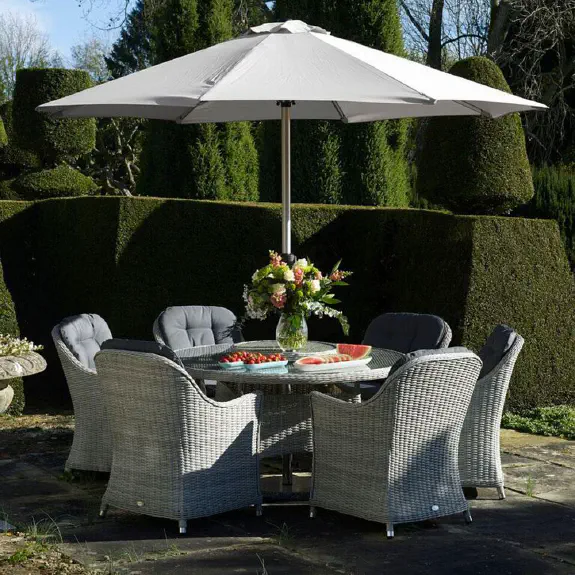
When the first warm weekends of May arrive, the garden suddenly becomes the most popular room in the house. A good parasol makes it far more comfortable to eat, work or relax outside, and it protects your garden furniture cushions from fading too. With so many styles available online, though, it helps to know what to look for before you order.
Start With The Size
The most common mistake is buying a parasol that is too small. Measure the area you want to shade before you shop, whether that is a dining table, a pair of sun loungers or a corner sofa.
A useful rule of thumb is to choose a canopy that extends beyond the edge of your table on all sides, so people sitting on the chairs are in the shade too, not just the table top. Remember that the sun moves through the day, so a little extra width is always welcome.
- Small balcony or bistro set: a compact or half parasol that sits against a wall saves space.
- Four to six seat dining set: a medium sized round or square canopy usually works well.
- Large dining set or corner sofa: look at larger canopies or a cantilever design.
Centre Pole Or Cantilever?
Centre pole parasols are the traditional choice. The pole goes through the hole in the middle of a dining table, which helps with stability and keeps the canopy right where you need it. They are usually simpler and lighter.
Cantilever parasols, sometimes called side post or banana parasols, have the pole to one side, with the canopy hanging over the seating area. They are ideal for lounge sets and corner sofas, where there is no table hole, and many can be rotated or tilted to follow the sun. They do need a heavier base and a bit more floor space for the stand.
Do Not Forget The Base
A parasol is only as safe as its base. Even a light breeze can catch a canopy, so always check what base weight the manufacturer recommends for your model and size, and do not go lighter.
Bases come in several types:
- Granite, concrete or cast iron bases, which are heavy and stable.
- Fillable plastic bases that you weigh down with water or sand.
- Cross bases with slabs for cantilever parasols.
If you are buying separately, make sure the base fits your pole diameter. A 15kg parasol base is one example of the kind of weighted stand you will find, but match it to your own parasol.
Fabric, Frame And Features
Look for a canopy made from a fade resistant, water repellent fabric. Many parasols list a UV protection rating in their product details, which is worth comparing. Lighter colours keep the area under them feeling cooler and brighter, while darker shades give deeper shade and hide marks better.
Frames are typically aluminium, steel or wood. Aluminium is light and does not rust, wood has a warm, classic look, and steel is sturdy but needs a good coating to stand up to British weather.
Handy extras include a crank handle to open and close the canopy easily, a tilt function, an air vent at the top to let wind pass through, and a protective cover for storage.
Using And Storing Your Parasol Safely
- Close the parasol whenever you leave the garden, and always when it is windy.
- Never leave it open overnight.
- Let the canopy dry fully before you put the cover on.
- Store it in a shed or garage over winter if you can.
Take a look at our outdoor umbrella section to compare sizes and styles, and you will be ready for long, shady afternoons in the garden all summer.